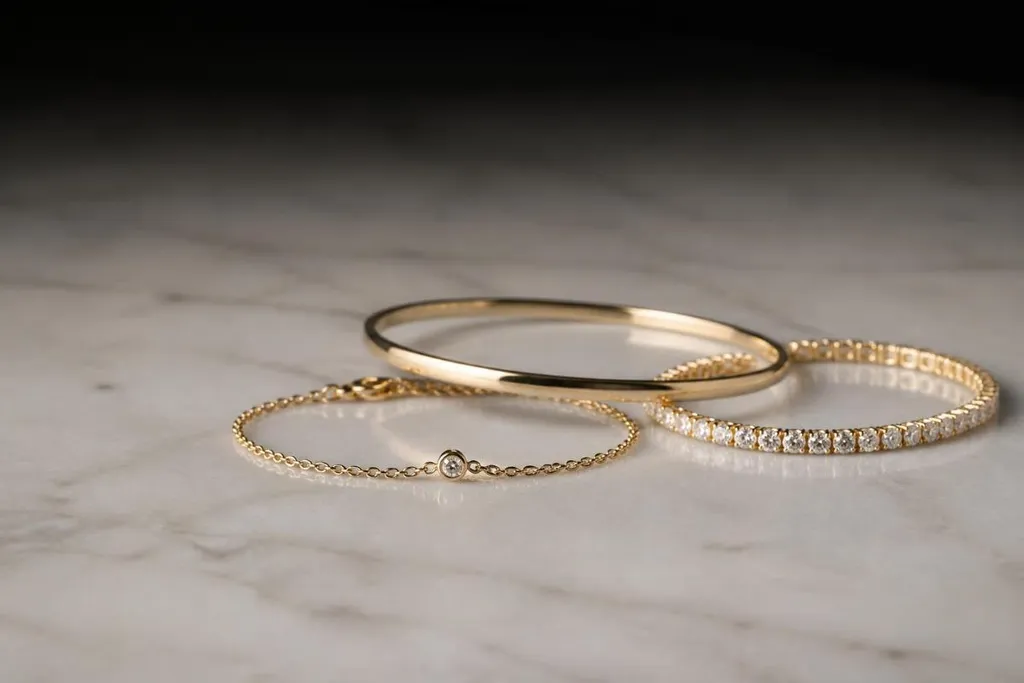
Personal jewellery should feel considered from every angle, not merely impressive in a photograph. A strong visual idea is most persuasive when comfort and longevity have shaped it too. At its best, the design brings fine detail into constant view, making fit and articulation as important as sparkle. That clear purpose offers more than a passing trend: it creates an aesthetic that can be adapted to personal taste without losing its essential character. The intended impression is polished, with a result that remains practical.
A relevant selection is Lily Arkwright's bracelets collection. Looking across complete designs makes it easier to judge scale, side profile and the relationship between the principal feature and the surrounding metalwork. It also places carat weight, dimensions and decorative detail in the context of a finished piece rather than a specification list. The intended impression is polished, with a result that remains practical.
Understanding the Design's Character
The style succeeds through visual hierarchy. A close, fluid line looks polished on its own and can also anchor a considered wrist stack. A disciplined design preserves this identity even when colour, extra stones or a more decorative finish are introduced. That discipline keeps the composition polished rather than overstated, while supporting a piece that remains practical.
The less obvious view is equally revealing. Articulation, underside finishing and clasp construction matter as much as the top view because they control how fluidly the bracelet follows the wrist. A polished design carries the same logic through every angle, so the profile feels connected to the first impression rather than treated as an afterthought. From every angle, the workmanship should look polished and feel practical.
Choosing Scale, Fit, and Materials
Selection should begin with the feature that changes the appearance most: measure the wrist and add only enough ease for the preferred fit; excessive movement can feel untidy and exposes the piece to more impact. This approach keeps specifications in context and prevents a single number or label from dominating the decision. Such comparison encourages a polished decision with a practical basis.
The setting must do more than hold the design together. Links, clasp and safety mechanism should move smoothly and sit comfortably, with no sharp areas pressing against the wrist. The best craftsmanship feels discreet: security is present, but it does not overwhelm the feature it protects. The finished construction should appear polished and prove practical.
Styling and Caring for the Piece
Longevity begins with choosing a design appropriate to the wearer's habits. A bracelet should move without sliding continually over the hand. Fit, clasp position and the height of any settings determine whether it remains polished and comfortable through ordinary gestures. Use gentle cleaning, store the bracelet closed and separate, and have the clasp, links and stone settings checked if movement becomes uneven or any part starts to catch. Those habits help a polished piece remain practical.
Future flexibility has real value. A watch, cuff, existing bangles and sleeve length provide useful context for scale, metal colour and how much movement will feel comfortable at the wrist. A considered choice can move from everyday clothing to formal occasions without losing the personal quality that made it appealing initially. The wider collection can then feel polished, while this piece remains practical.
Final Thought
This style is most successful when its defining idea, construction and daily function are treated as one decision. The attraction may begin with sparkle, colour or silhouette, but lasting satisfaction comes from proportion, secure craftsmanship and a fit that feels natural. The version that still looks convincing after the first excitement has settled is usually the one with the strongest chance of remaining meaningful for years. Patient comparison is part of choosing well, not a delay. A short pause now can prevent a visually impressive but unsuitable choice. That is the difference between a merely attractive option and one that feels both polished and practical.